The Business Hidden Inside Digital Asset Chaos
How a tax problem became part of the digital asset industry’s infrastructure
On paper, Zac McClure followed the classic path into high finance. Finance degree from USC. Bocconi in Milan. Investment banking at JPMorgan during the financial crisis. MBAs from INSEAD and Wharton. Consulting at Bain.
That career track usually leads to private equity or hedge funds.
Instead, Zac built a company solving one of the stranger problems created by the rise of digital assets: calculating taxes in a financial system that was never designed for it.
A recurring theme on Exploring Prosperity is the role of unlikely entrepreneurs in economic progress. Markets mature when people build the infrastructure that allows them to function in the real world.
Many strategists in the digital asset industry, including recent guests Matt Hougan of Bitwise and Zach Pandl of Grayscale, believe 2026 will be the year building out infrastructure. The speculative era dominated the early years. The next phase focuses on systems that make the market usable at scale.
Zac McClure’s company sits squarely in that layer.
The story begins in 2017. Trading in digital assets exploded. Millions of investors moved assets across exchanges, wallets, and tokens at a pace traditional financial systems had never encountered. When tax season arrived, many investors discovered they could not calculate what they owed.
The problems fell into two broad categories: limitations of the tax code itself and challenges unique to crypto markets.
Tax code problems
• A trader turns $10,000 into $1 million during a bull market. A large tax bill follows. The next year the market collapses and most of the gains disappear. The tax bill remains.
• U.S. tax law does not allow capital losses to offset gains from prior years. Losses can only offset future gains.
• Large losses can only offset ordinary income by $3,000 per year. Someone who loses hundreds of thousands of dollars may carry those losses forward for decades.
• Taxes on investment gains are owed throughout the year, not only in April. Many new investors discover this only after penalties and interest have accumulated.
Crypto-specific problems
• Trading one cryptocurrency for another, a practice that became widespread with the growth of decentralized finance (DeFi), creates a capital gain or loss that must be translated into U.S. dollars for each trade.
• Investors often trade across multiple exchanges and wallets. Records are scattered across platforms.
• Forks and airdrops place new tokens into wallets automatically. Those tokens can create taxable income even if the owner never asked for them.
• Exchange records are incomplete or inconsistent, particularly during the early years of the market.
• Regulatory guidance often arrives years after the activity occurred. Taxpayers must interpret rules that did not exist when the transactions took place.
These problems created a new category of work.
Crypto exchanges built trading platforms. Developers built new blockchains. Almost no infrastructure existed to translate those transactions into the accounting and reporting rules of the real economy.
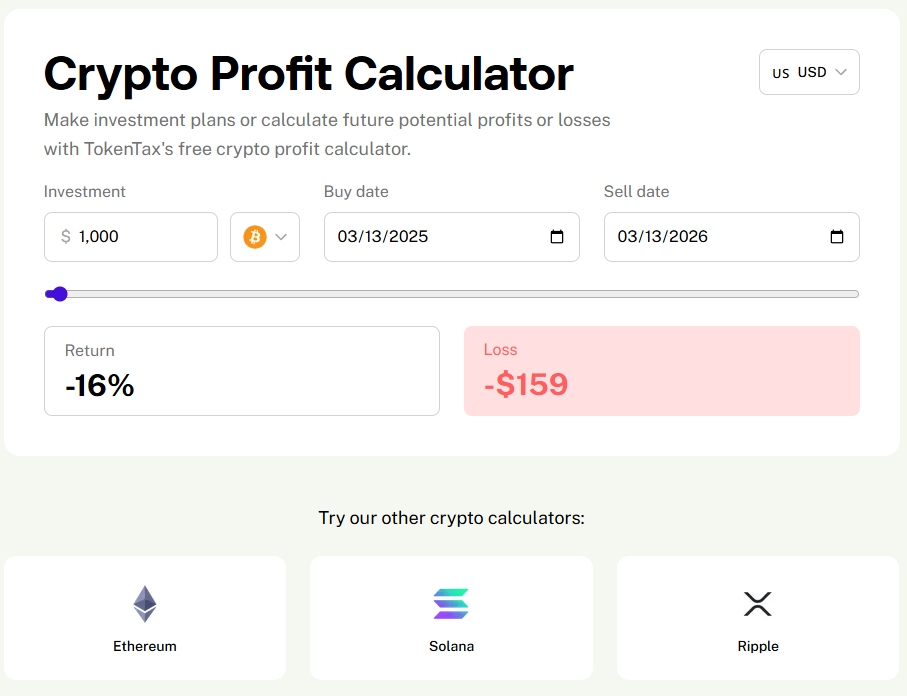
A free tax calculator on their web-site: https://tokentax.co/crypto-profit-calculator
That gap became the foundation of Zac’s company, TokenTax.
Zac did not set out to become an entrepreneur. His path moved through investment banking, teaching, and work abroad before he encountered crypto closely enough to see the problem.
A clip from the interview on YouTube.
That pattern appears frequently in emerging industries. A new technology spreads quickly. Systems around it struggle to keep up. Someone notices the friction and begins solving it.
Calculating taxes for cryptocurrency transactions may not sound like the center of a technological revolution. Yet work like this allows markets to function.
Infrastructure often begins with someone deciding that the invisible work is worth doing.
The full interview with Zac McClure below. You can find him at https://tokentax.co/blog.
Thank you very much to our sponsors:
Truflation: BUY Truflation products/services and save 10% using code BOBDEW10. Learn about what prices are actually doing by going to https://truflation.com/marketplace/us-inflation-rate
Foundation: Protect your Bitcoin using the latest off-line technology with easy-to-use Passport. Their next product, Passport Prime will protect all passwords off-line with even better technology. https://foundation.xyz/
River Financial: If not cold storage for your Bitcoin, I’d highly recommend River for buying and holding- River is engineered to protect your Bitcoin over the long run. Use this link for discounts: https://river.com/signup?r=T7GGAF7G